STUTTERING CAN CREATE TIME, MISSISSAUGA
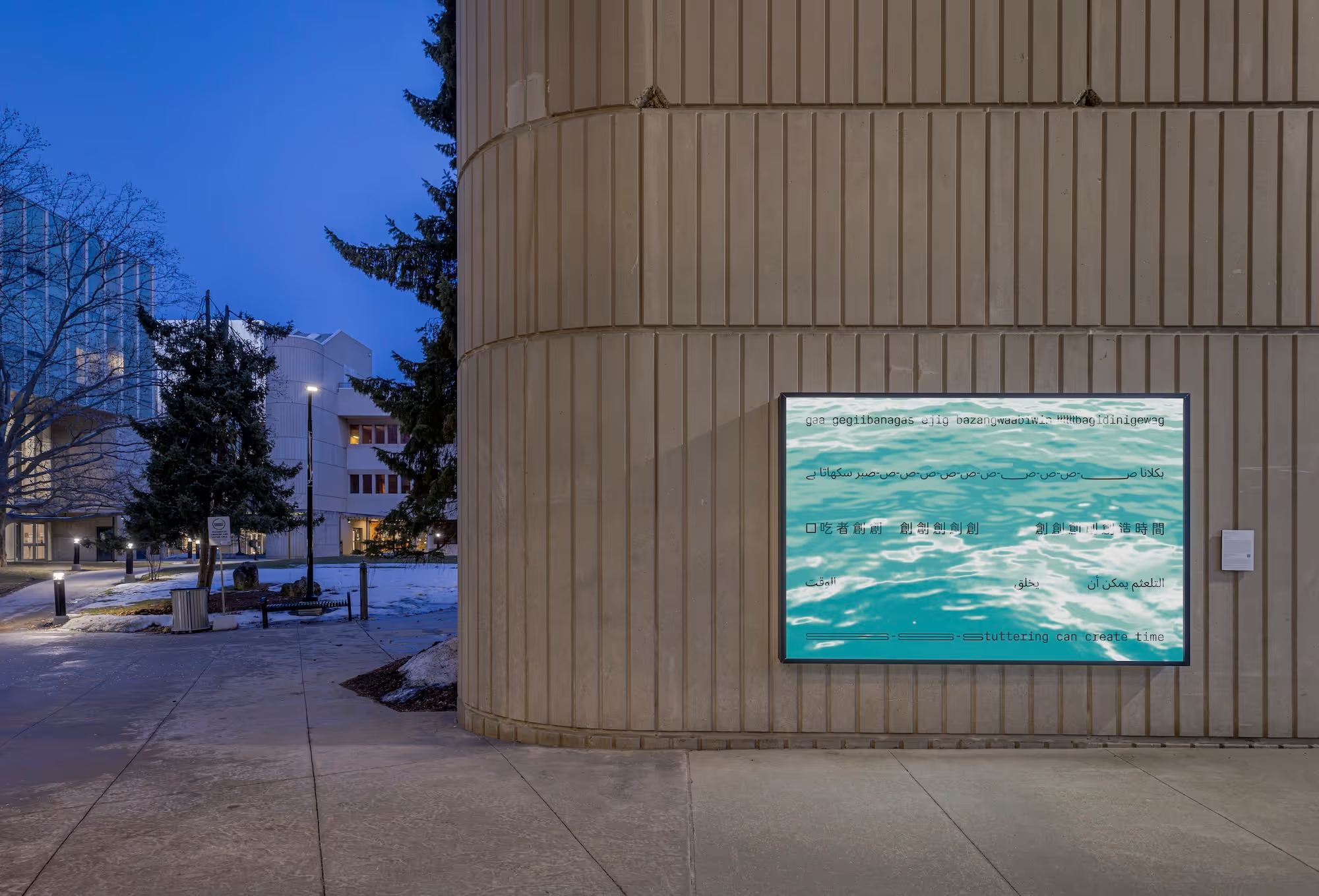
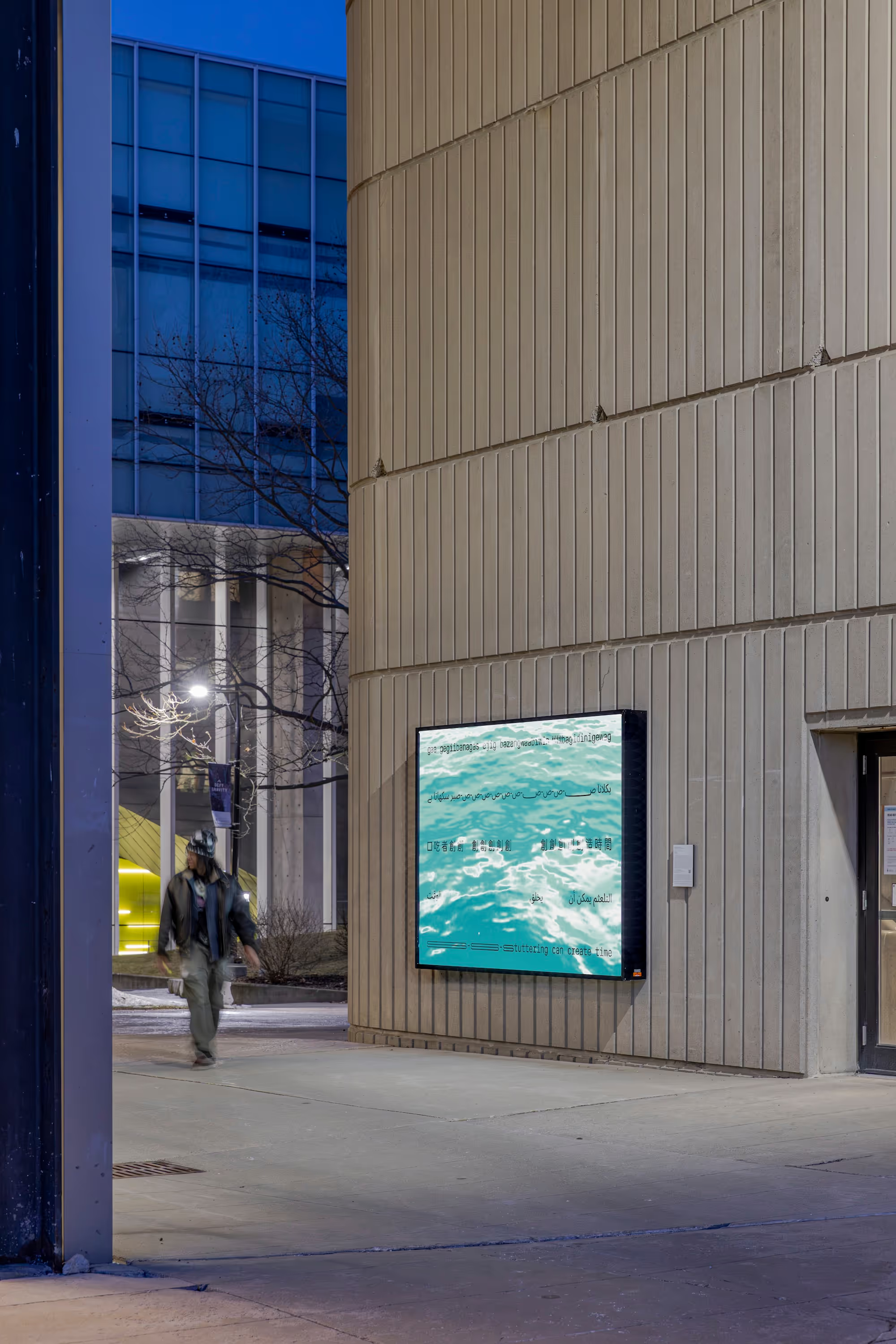
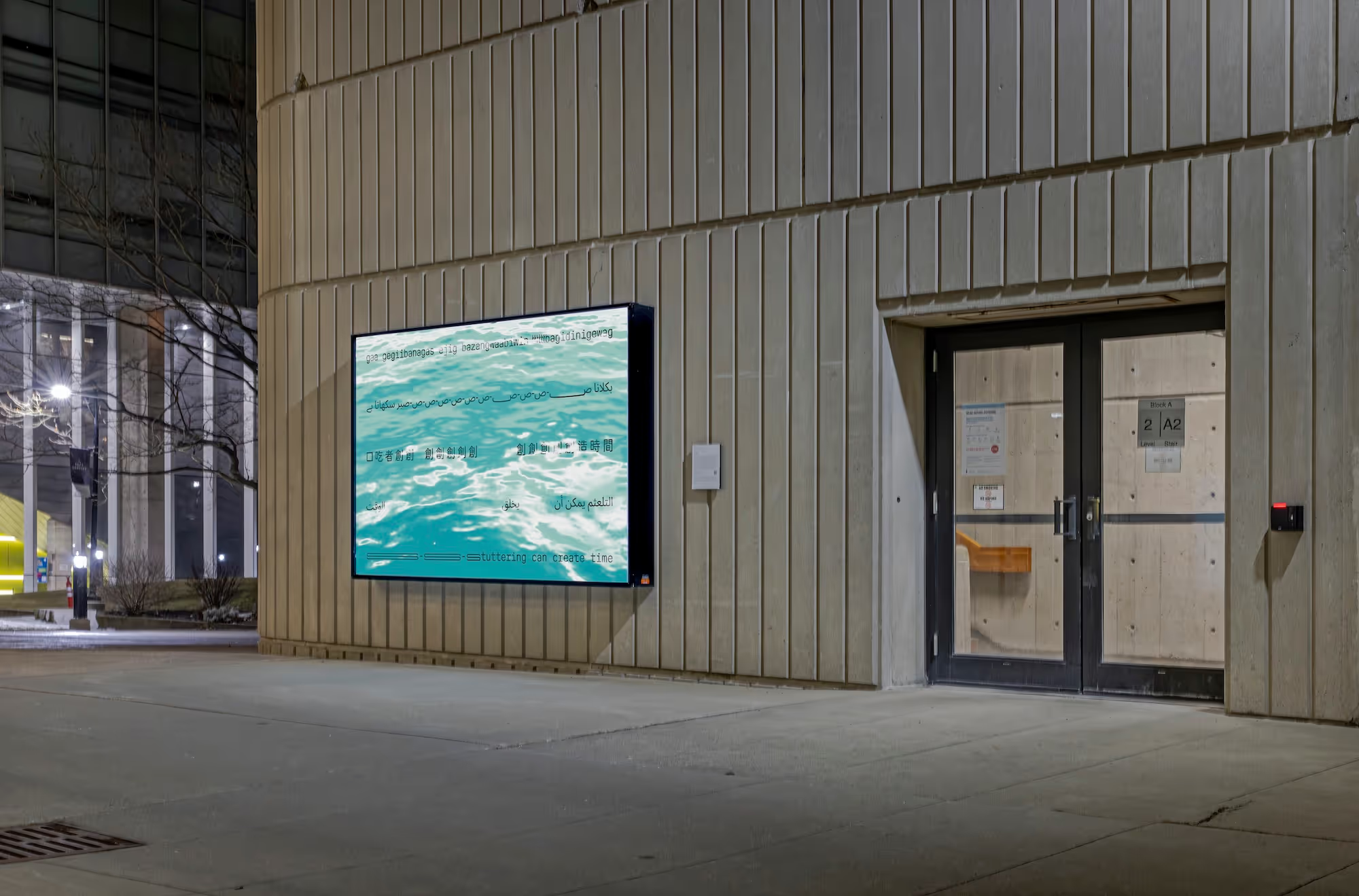
This iteration of the artwork was for Blackwood Gallery’s exhibition In A Manner of Speaking. As a collective, People Who Stutter Create believes that stuttering has the power to open up space for deep listening and connection. By embracing the possibilities inherent in repetition, prolongation, and pauses, the group reshapes social reality through the acts of description and expression. As the collective People Who Stutter Create, we were invited by Blackwood Gallery to contribute to their ‘In A Manner of Speaking’ exhibition. continuing with the site-specific nature of the project, We developed the artwork from the previous version at Whitney museum to include five languages and an overlay of waves based on lake ontario.
Read more about the project on the Blackwood gallery’s website.
artwork description
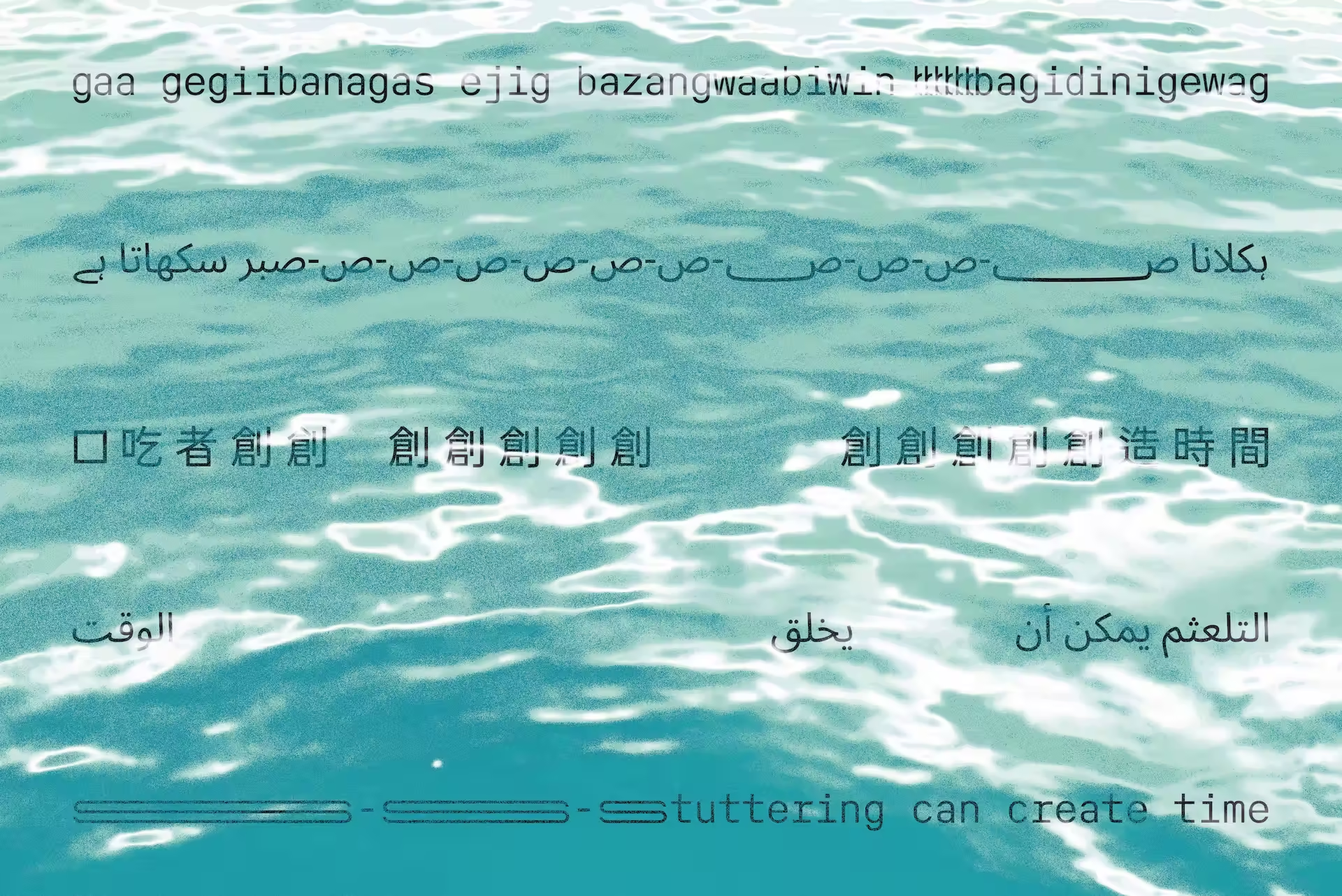
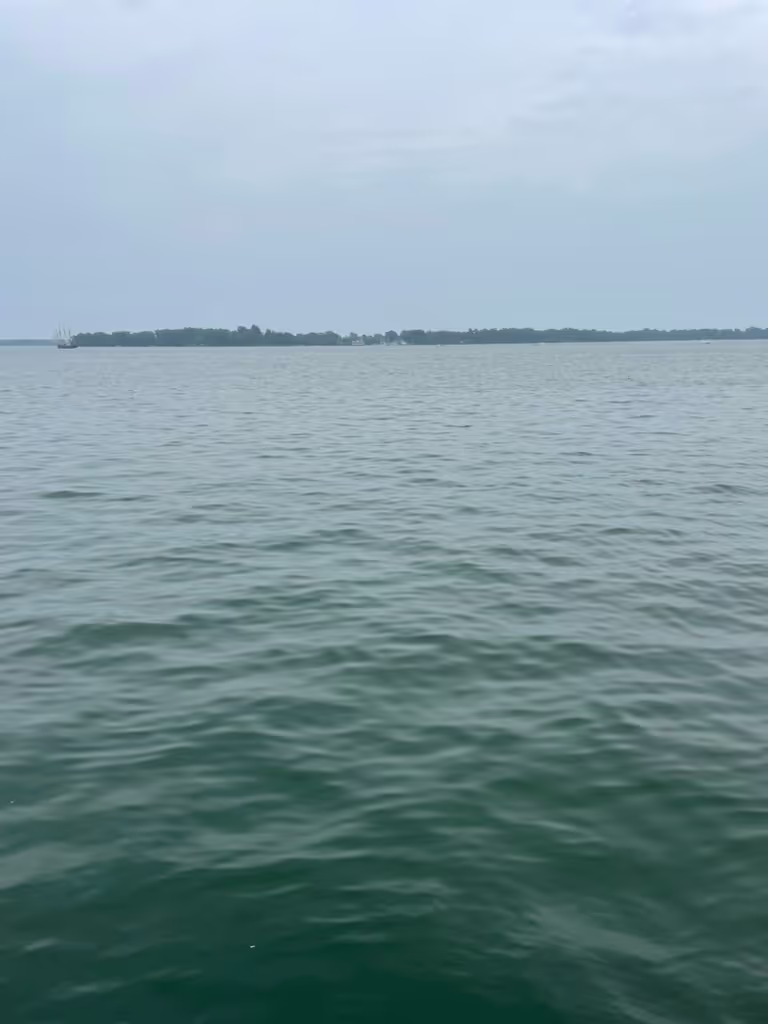
Light shines off the surface of the water. The image is derived from a photograph designer Conor Foran took of Lake Ontario. The text is in a sans-serif typeface organized in five evenly spaced lines, each representing a form of stuttered speech: repeated syllables, repeated words, blocks (pauses in speech), and prolonged syllables. The first line, in Anishinaabemowin, translates to “Stutterers allow/offer a moment.” The word bagidinigeweg ("they allow/offer") is preceded by six overlapping b’s, representing a repetition on the letter b. The second line, in Urdu, translates to “Stuttering teaches patience.” The letter at the beginning of the word صبر ("patience") is stretched and repeats 10 times in a row, representing prolonged sound and repetition. The third line, in Chinese, translates to “People who stutter create time.” The character 創 (the first character of a Chinese word that translates to “create”) appears twelve times in a row, representing repetition. There are intentional spaces after the second and seventh appearance of this character, representing blocks in speech. The fourth line, in Arabic, translates to “Stuttering can create time.” There is an intentional space between التلعثم يمكن أن ("stuttering can") and يخلق ("create"), and an even larger space before الوقت ("time"), representing blocks in speech. The fifth line, in English, reads "Stuttering can create time." The “s” in “stuttering” is stretched horizontally to represent prolonged sound. The Anishinaabemowin and English lines are all lowercase and lack punctuation, giving a casual and informal, almost text message-like feel.
process
design decisions
The artwork features text in multiple languages layered over a background of rippling, turquoise water. Waves, with their rhythmic and unpredictable nature, serve as a potent symbol long associated with stuttering and speech. The Egyptian hieroglyph for stuttering incorporates a wave-like motif, and as speech therapist Kristel Kubart notes, “stuttering is as natural as whirling waves and calm creeks.” This work embodies the values, ideals, and hopes of stuttering pride. It celebrates stuttering culture and underscores the transformative potential of dysfluency–a term that encompasses stuttering/stammering and other communication differences such as aphasia, Tourette’s, and dysarthria. Here, stuttering makes apparent the fluidity of time and speech.
The image is derived from a photograph Conor Foran took of Lake Ontario in July 2023.
Choice of languages
This new iteration incorporates five languages, including Urdu, Arabic, and Chinese–the three most widely spoken languages in Mississauga after English–as well as Anishnaabemowin, honouring the Mississaugas of the Credit First Nation. All translations were developed in collaboration with individuals who stutter, with the exception of the Anishinaabemowin contribution.
Anishinaabemowin
‘Stutterers allow/offer a moment’
‘Gaa gegiibanagaskwejig bazangwaabiwin bagidinigewag’
Translator Michael thunderbird:
‘Since “time” is a colonial concept for Anishinaabeg there is no word I know for it, Bazangwaabiwin describes closing one's eyes to think, to have a moment, to take time.’
Urdu
‘Stuttering patience teaches’
‘Haklaana sabr sikhaata hay’
Translator Bhavna Bakshi:
‘When translating “stuttering can create time” into Urdu, it becomes “haklaana waqt banata hai.” However, the literal translation comes off as something more annoying or mechanical rather than reflective or profound. It doesn’t convey the deeper, contemplative energy of the original phrase.
This is why I chose to use the word “sabar” (patience) instead. In our language, sabar carries a soothing and reflective quality, symbolizing the ability to pause, ground oneself, and embrace the flow of life. It captures the harmony between time and patience, allowing the translation to feel more meaningful and aligned with the intent of the message. By using sabar, the phrase resonates culturally and evokes a sense of inner reflection rather than irritation.
The literal translation of this phrase into English doesn't maintain proper grammar. It ends up reading as: "stuttering patience teaches," which might sound awkward or unclear.
However, in Hindi/Urdu, this structure is grammatically correct and naturally understood, conveying the intended meaning just as it would in properly structured English.’
Arabic
‘Stuttering can create time’
‘At-til‘ath-thum yumkin an yakhluq al-waqt’
Translator hussain alhussainy:
‘The Arabic word يخلق (yakhluq) means “to create” in the sense of “bringing into existence.” It is derived from the root خلق (kh-l-q), which is commonly associated with creation, formation, or bringing something into being. The word is often used in contexts related to creativity, divine creation, or producing something entirely new.
There are synonyms in Arabic for the word “create” that carry less impact or grandeur, but يخلق is the best choice for the context of this sentence. The way I see it, we are “creating” time in a world that may not inherently offer it.’
credits
| Contributor | Jia Bin |
|---|---|
| Contributor | Delicia Daniels |
| Founder | JJJJJerome Ellis |
| Designer | Conor Foran |
| Contributor | Kristel Kubart |
| Anishinaabemowin | Michael Thunderbird |
|---|---|
| Arabic | Hussain Alhussainy |
| Chinese | Jia Bin |
| English | JJJJJerome ellis |
| Urdu | Bhavna Bakshi |
| Urdu | Ahwaz Akhtar |
|---|---|
| Chinese | Jia Bin |
| Arabic | Hussain Alhussainy |
| English | Kristel Kubart |
| Gallery | Blackwood Gallery |
|---|---|
| Curator | Karie Liao |
| Typeface: Dysfluent Mono | Conor Foran |
| Typeface: Noto Sans Arabic | Google Fonts |
| Typeface: Glow Sans TC | Celestial Phineas |